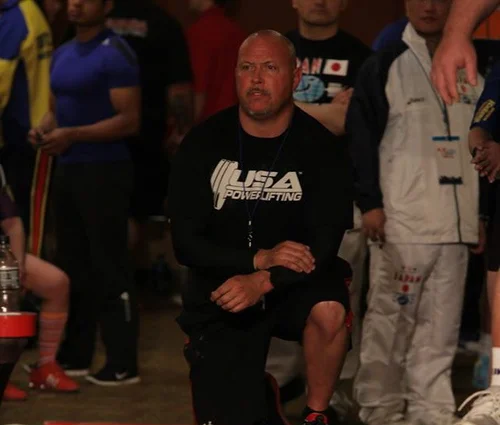
Matt Gary
SSPT 联合创始人 · 比赛执教与力量训练教练
曾与 Sioux-z 一起为雷·威廉姆斯提供比赛日支持。他也是《Game Day Coaching Manual》(比赛日执教手册)的作者。
带赛经历与比赛日手册
Matt Gary 是 SSPT 的联合创始人,长期从事力量举训练指导与比赛现场执教。他与妻子 Suzanne(Sioux-z)Hartwig-Gary 于2008年共同创办 SSPT。
据SSPT 官方简介,他从2003年起参与国家队执教,曾担任美国国家队教练,现任英国公开组经典力量举国家队主教练。他在2012年获评 USAPL 年度教练,也曾负责该组织的教练教育工作。
他与 Sioux-z 曾为雷·威廉姆斯(Ray Williams)提供比赛日支持。雷在公开推荐中回顾,两人的比赛方案帮助他在2014—2018年连续五次夺得 IPF 120公斤以上级公开组无装备世界冠军,并刷新深蹲和总成绩世界纪录。
他把多年带赛经验写进了《Game Day Coaching Manual》(比赛日执教手册)。据官方介绍,手册讨论试举选择、运动员沟通和临场策略,并提供12份热身进阶示例和15个比赛日策略案例。它把报多少重量、什么时候热身、现场怎样调整,放在同一个比赛过程中讨论。
他的比赛日执教也受到同行关注。Stronger by Science 刊登的专题访谈由 Eric Helms 与 Mike Zourdos 提问,集中讨论试举选择和现场判断。RTS 创始人 Mike Tuchscherer 也在手册页面的推荐中谈到,自己接受 Matt 与 Sioux-z 带赛时,得到的帮助包括试举选择、热身时机和比赛准备。
照片来源:SSPT 官方简介
依据 Matt Gary 的英文书面回复整理,按北京时间于2026年10月27日收件。下文保留完整中文问答,文末附完整英文问答。标题、小标题、人物简介、导读与编者注由编辑撰写;回答为受访者本人观点,中文译文尚未经受访者审阅。
QUESTION 01从训练记录到开把,先看哪些信息
你怎样把运动员的训练表现转化为比赛试举计划?选择开把时,相比单看估算的最大单次重量,你觉得哪些信息更有用?
Matt Gary:
我会先观察运动员赛前最后一个较重训练阶段,也就是出峰阶段。理想情况下,我能回看大约三到五周的训练。这能让我了解他当前的能力、技术,以及比赛当天发挥力量的准备情况。我可以看到他在较重负荷下怎样完成动作,在哪里、以什么方式遇到困难,从而比较实际地估计他的最高表现。
我会把几类信息放在一起看:RPE、剩余次数、杠铃速度,以及运动员举起最重训练重量时的体重。我也会比较这一阶段与过去的训练,并回看他们当时在比赛里取得了什么成绩。
为了了解这些历史情况,我会与负责写计划的教练合作。随后,运动员、计划教练和我会开一次视频会议。我们一起商定比赛安排,考虑运动员的目标、过去的表现和个人最好成绩。
我不会只依赖估算的最大单次重量。我会结合杠铃速度和自己的执教观察,估计运动员可能还留有多少公斤余量。例如,一名运动员深蹲225公斤,大约是 RPE 9。如果杠铃速度和动作表现让我判断他还能多举7.5公斤,我可能会把他的最高表现估在232.5公斤左右。
然后,我会从这个估计往回推,选择各把重量。我也会问运动员:他是否相信自己能用计划的开把重量,安全地完成三次技术良好的动作?如果他回答可以,这就是检查开把是否足够保守的一条有用信息。确定最高表现的估计和各把重量后,我们再安排热身。
编者注
225公斤、RPE 9与再加7.5公斤,是 Matt 在例子中的综合判断,不是固定换算公式。“能完成三次”也是他询问运动员的一项检查,没有要求运动员赛前额外做一组开把重量三次。
QUESTION 02开把成功却很吃力,怎样调整二把
如果开把成功了,却比预期困难得多,你会先看哪些信息,再决定二把重量?如果方便,也请分享一个比赛执教中的例子。
Matt Gary:
我首先会看运动员的肢体语言,并问他这一把感觉如何。我想了解他认为试举中发生了什么。他觉得这是可以修正的执行问题,还是说这个重量比我们的预期更准确地反映了他当前的力量?
我也会考虑他过去用这个重量的表现。他以前是否用它开把?那时是不是更快、更轻松,还是有过类似的经历?运动员的经验也很重要。新手的技术经验可能较少,在负重时做出较大的调整也可能更困难。更有经验的运动员,可能更能准确判断这一把、作出调整,并在重量上升时保持信心。
举个假设的例子:训练表现让我们把最高表现估在232.5公斤左右,计划用210公斤深蹲开把。如果开把成功,却意外地很慢,我不会自动照原计划报二把。我会问运动员感觉如何,同时观察他的肢体语言。
如果他感觉稳定,又能指出一个明确、可修正的执行问题,继续推进可能仍然合理。对经验较多、能够落实修正的运动员,尤其如此。
如果他说重量比预期困难得多,或已经接近极限,又或者没有明确的技术原因,我就会重新考虑二把,选择比原计划轻的重量,让当天剩下的试举更稳妥。这也是我们经常预先准备二把备选方案2B、2C,或备选重量区间的原因。
编者注
原答使用“imagine”,这里是说明判断过程的假设情境,没有作为某场真实比赛的记录。2B、2C指二把的备选方案,不是额外试举次数。降低的是原定二把候选,正式报重仍须符合所参加比赛的规则。
QUESTION 03第一次带赛,除了报重还要准备什么
对于第一次带运动员参赛的年轻教练,除了选择试举重量,你最希望他提前准备什么?你会怎样判断他是否准备充分?
Matt Gary:
除了试举计划,我希望教练了解比赛的具体组织情况:
- 称重信息、抽签号码和分组什么时候公布?
- 场地怎样布局?热身区离比赛台有多远?
- 热身区有什么器材?是比赛规格的器材,还是需要使用力量架?
- 有几个场次、几个组?每组有多少运动员?比赛什么时候开始?
- 热身区有没有可以查看比赛进度的计分屏幕?
了解这些细节,有助于教练安排热身和转场时间,并在整天的比赛中提供稳定的支持。
我也希望他们带上实用物品:运动员需要时可用的电解质冲剂、硬拉用的婴儿爽身粉、备用夹具,以及可能用于应对肌肉抽筋或拉伤的筋膜枪。
我会把赛前准备和当天的处理放在一起看。他们是提前还是准时到场?是否了解赛程和场地?有没有备齐运动员可能需要的器材与用品?能否保持冷静和专业?运动员是否显得安心,并准备好按比赛要求完成动作?如果是水平较高的比赛,他们是否提前了解过对手和/或其他教练团队?
我也会考虑运动员的目标和结果,但不会只凭总成绩判断教练是否准备充分。即使结果没有完全按计划发展,准备充分的教练仍能作出好的决策,有效支持运动员。
编者注
这份物品清单按原答保留,反映 Matt 的个人带赛习惯,不作为伤情诊断或处理方案。原文的 extra clips 未说明具体夹具类型。
完整英文问答
Question 1
How do you turn a lifter’s training performance into a plan for their meet attempts? When choosing an opener, what information do you find more useful than an estimated one-rep max alone?
Answer
I start by observing the lifter’s final heavy, or peaking, block before the competition. Ideally, I can review about three to five weeks of training. That gives me a useful picture of their current fitness, technique, and readiness to express their strength on meet day. I can see how they move under heavy loads, where and how they struggle, and get a realistic estimate of their top-end strength.
I consider several kinds of information together: RPE, reps in reserve, bar speed, and the lifter’s body weight when they perform their heaviest lifts. I also look at how their training compares with previous training blocks and what they went on to achieve in competition. For that historical context, I work with the coach who writes their program. The athlete, programming coach, and I then meet by video call to agree on a competition plan that reflects the lifter’s goals, past performances, and personal bests.
I don't rely on estimated one-rep maxes in isolation. I use bar speed and my coaching eye to estimate how many kilos the lifter might have had in reserve. For example, if a lifter squats 225 kg at about RPE 9, and the bar speed and lift suggest that another 7.5 kg was available, I might estimate their top-end performance at about 232.5 kg.
From there, I work backward to choose the attempts. I also ask whether the lifter believes they could safely perform the planned opener for three technically sound reps. If they say yes, that is a useful check that the opener is appropriately conservative. Once we have set the top-end and attempts, we plan the warm-ups.
Question 2
If an opener is successful but much harder than expected, what information do you look at before deciding the second attempt? If you’re happy to share one, an example from your meet-day coaching would be really helpful.
Answer
I first look at the lifter’s body language and ask how the lift felt. I want to understand what they think happened during the lift and whether they believe it was an execution problem that can be corrected, or whether the weight reflects their current strength more accurately than we expected.
I also consider their previous performances with that weight. Have they opened with it before? Was it faster and easier then, or did they have a similar experience? The lifter’s experience matters, too. A novice may have less technical experience and may find it harder to make a major adjustment under load. A more experienced lifter may be better able to assess the attempt accurately, make an adjustment, and remain confident as the weights increase.
For example, imagine that our plan calls for a 210 kg squat opener, based on training that suggested a top-end performance around 232.5 kg. If the opener is successful but unexpectedly slow, I wouldn't automatically move to the planned second. I’d ask the lifter how it felt and look at their body language. If they felt stable and identify a clear, fixable execution issue, moving forward may still make sense, especially with an experienced lifter who can apply the correction. If they say the weight felt much harder than expected or close to maximal, or there’s no clear technical explanation, I’d reconsider the second attempt and choose a lighter weight that better protects the rest of their day. This is why we often build contingencies into our plan with 2B and 2C attempt options or ranges.
Question 3
For a young coach handling a lifter at a meet for the first time, what would you most want them to prepare in advance beyond attempt selection? How would you judge whether they’re adequately prepared?
Answer
Beyond the attempt plan, I’d want the coach to understand the meet’s logistics:
- When will weigh-in information, lot numbers, and flight assignments be posted?
- What is the venue layout, and how far is the warm-up area from the platform?
- What equipment is available in the warm-up room? Is it competition-standard equipment, or will the lifter use power racks?
- How many sessions and flights are there, how many lifters are in each flight, and when does the competition start?
- Will there be a scoreboard available with screens in the warmup area?
Knowing those details helps a coach plan the timing of warm-ups and transitions, and provide steady support throughout the day.
I’d also want them to bring practical supplies: electrolyte packets in case the lifter needs them, baby powder for deadlifts, extra clips, and possibly a massage gun for muscle cramps or strains.
I’d judge their preparation by looking at both what they did beforehand and how they handled the day. Did they arrive early or on time? Do they understand the schedule and venue? Do they have the equipment and supplies the lifter may need? Are they calm and professional, and does their lifter seem at ease and prepared to meet competition standards? In the instance of a higher-level competition, have they scouted their competition and/or other coaching staff?
I would also consider the lifter’s goals and the results, but I wouldn't judge a coach’s preparation by the total alone. A well-prepared coach can make good decisions and support the athlete effectively, even when the outcome does not go exactly as planned.
人物资料与出处
问答来源为 Matt Gary 本人的英文邮件回复,按北京时间于2026年10月27日收件,已与收到的原答核对。受访者同意参加供中文文章翻译与分享的问答。中文译文尚未经受访者审阅。